AI is Moving into Devices: The Big Shift from Apps to Intelligent Hardware
Artificial intelligence is no longer confined to standalone apps or chat interfaces. The next major transformation is happening at the device level, where AI is being deeply embedded into everyday hardware. This shift is turning smartphones, laptops, and wearables into proactive assistants that understand user intent and act on it automatically.
1. Smartphones Becoming Fully AI-Native
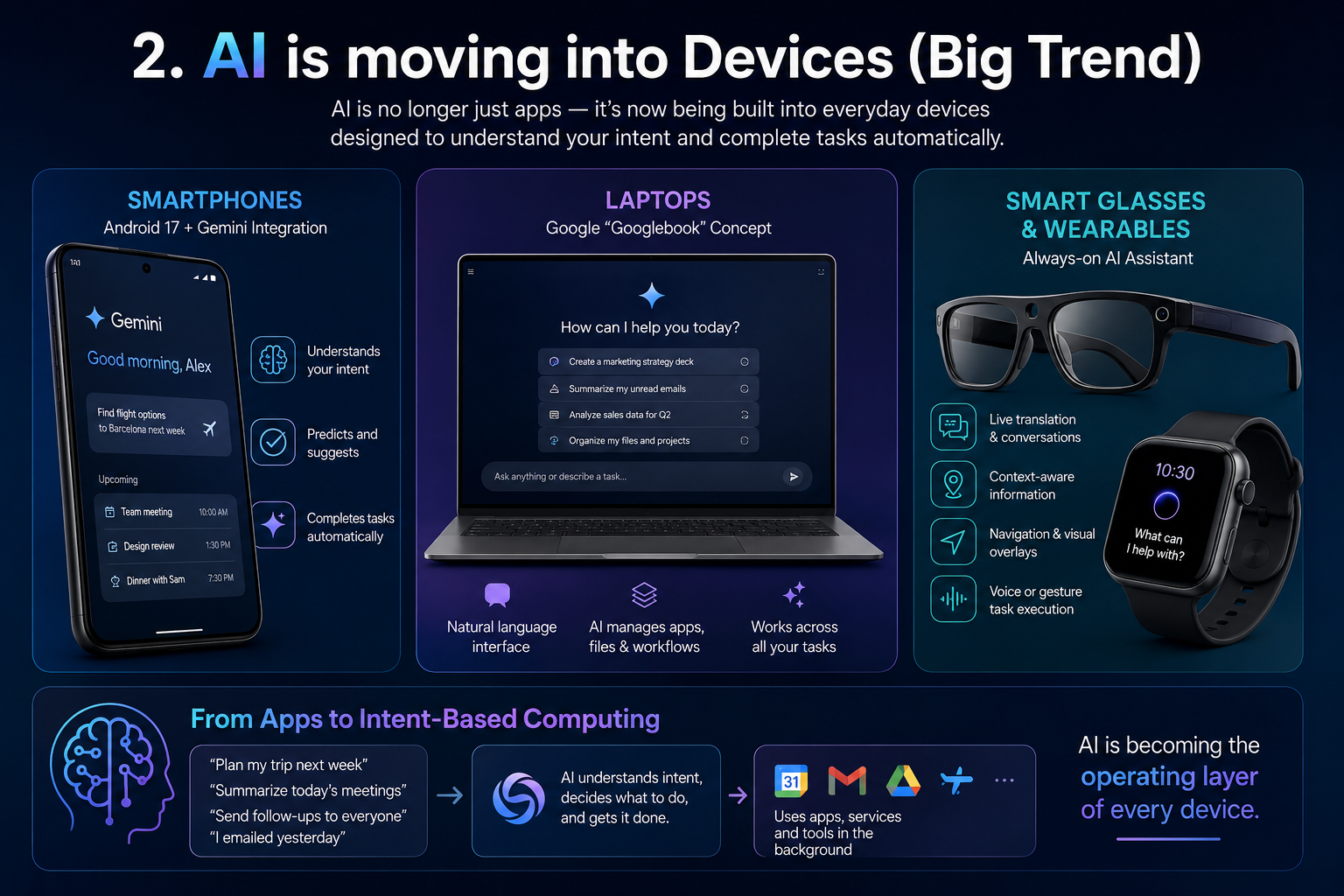
Modern smartphones are evolving beyond traditional operating systems into AI-first devices. With deeper integration of systems like Android and advanced models such as Google’s Gemini ecosystem, phones are increasingly capable of:
- Predicting user actions before they are requested
- Summarizing messages, emails, and notifications automatically
- Running multi-step tasks like booking, searching, and scheduling without manual input
Future Android generations (often discussed around concepts like “Android 17”) are expected to push this even further by making the entire phone experience intent-driven rather than app-driven.
2. AI-Powered Laptops and “Googlebook” Vision
Laptops are also being redesigned around AI-first principles. The emerging idea of a “Googlebook” concept represents a new category of computing devices where AI is not just a feature but the core interface layer.
In this model, users may:
- Ask the system to complete full workflows (documents, coding, research)
- Use natural language instead of menus and apps
- Rely on AI agents to organize files, emails, and projects automatically
Instead of switching between software tools, the AI becomes the central coordinator of all tasks.
3. Smart Glasses and Wearable AI Assistants
Wearables are becoming one of the most exciting frontiers for embedded AI. Smart glasses and next-generation wearables aim to provide continuous, real-time assistance without requiring screens or manual input.
Key capabilities include:
- Live translation of conversations
- Context-aware notifications (only when relevant)
- Navigation overlays and real-world information prompts
- Hands-free task execution through voice or gesture
This represents a shift toward “always-on intelligence” that operates alongside the user in real time.
4. From Apps to Intent-Based Computing
The biggest transformation is not the hardware itself but the way humans interact with technology. Instead of opening apps and performing step-by-step actions, users will simply express intent.
For example:
- “Plan my trip next week”
- “Summarize today’s meetings”
- “Send follow-ups to everyone I emailed yesterday”
The device then decides which tools, apps, or services to use in the background. This is where AI becomes a true operating layer rather than just a tool.
Conclusion
AI integration into devices marks a fundamental shift in computing. Smartphones, laptops, and wearables are rapidly evolving into intelligent systems that understand context, anticipate needs, and complete tasks autonomously. As companies like Google push deeper into AI-native ecosystems, the boundary between user and device will continue to blur—moving us closer to a world where technology acts more like an assistant than a tool.