AI Future Schools: What Facilities Are Available for Children?
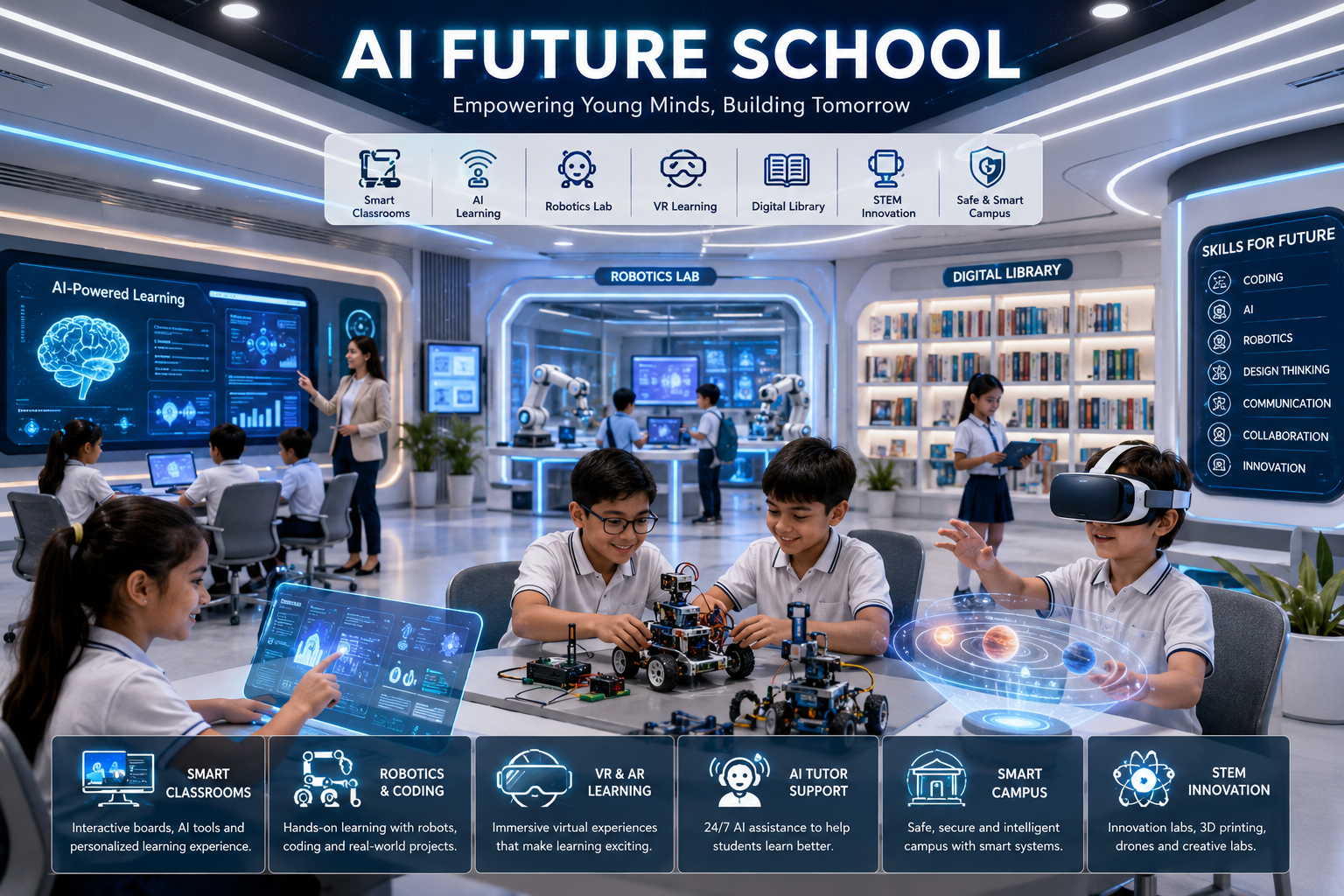
An “AI Future School” for children usually combines traditional education with advanced technology, robotics, coding, and personalized learning systems. Many modern AI-focused schools now offer smart classrooms, AI labs, VR learning, and robotics programs to prepare students for future careers.
Education is changing rapidly in the digital age, and Artificial Intelligence (AI) is becoming an important part of modern learning systems. Around the world, schools are beginning to use smart technologies to improve teaching methods, personalize education, and prepare students for future careers. These modern institutions are often called AI Future Schools because they combine traditional education with advanced technologies like robotics, virtual reality, coding, machine learning, and intelligent classroom systems.
Parents today want more than just textbooks and exams for their children. They want schools that can help children become creative thinkers, problem solvers, innovators, and confident users of technology. AI Future Schools are designed to meet these expectations by offering advanced learning facilities and skill-development opportunities.
In this blog, we will explore the various facilities available in AI Future Schools, how they benefit children, and why these schools are becoming the future of education.
What Is an AI Future School?
An AI Future School is a modern educational institution that uses artificial intelligence and smart technologies to enhance learning experiences. These schools focus not only on academic excellence but also on future-ready skills such as coding, robotics, data analysis, digital creativity, communication, and innovation.
Unlike traditional schools, AI Future Schools use technology to create personalized learning environments where students can learn according to their abilities, interests, and pace.
These schools often include:
- Smart classrooms
- AI-powered teaching systems
- Robotics labs
- Coding programs
- Virtual learning tools
- STEM education centers
- Digital libraries
- Smart security systems
The goal is to prepare children for a future where technology and AI will play a major role in almost every industry.
Smart Classrooms and Interactive Learning
One of the most important facilities in AI Future Schools is the smart classroom.
Traditional blackboards are being replaced by:
- Interactive smart boards
- Touchscreen displays
- Digital projectors
- AI-powered teaching software
- Online learning platforms
Teachers can present lessons using videos, animations, 3D models, and simulations, making subjects easier to understand. Students become more engaged because learning becomes visual and interactive rather than just theoretical.
For example:
- Science lessons can include 3D models of the human body.
- Geography lessons can use interactive world maps.
- Mathematics can be taught through visual problem-solving tools.
AI systems can also analyze student performance and suggest improvements based on their strengths and weaknesses.


Personalized Learning with AI
Every child learns differently. Some students learn quickly, while others need more time and practice. AI Future Schools use intelligent software to provide personalized learning experiences.
AI-powered systems can:
- Track student progress
- Identify weak areas
- Recommend practice exercises
- Adjust lesson difficulty
- Provide instant feedback
For example, if a child struggles with mathematics, the AI system may provide extra exercises and simpler explanations. If another student learns quickly, the system can offer advanced topics to keep them challenged.
This personalized learning approach helps students:
- Learn at their own pace
- Build confidence
- Reduce academic pressure
- Improve overall performance
Children no longer feel left behind or bored because lessons are adapted to their individual needs.
Robotics and Coding Labs
AI Future Schools often include dedicated robotics and coding laboratories where students can explore technology through practical learning.
Children can learn:
- Basic coding
- Programming languages
- Robotics engineering
- Artificial Intelligence concepts
- App development
- Game design
- Machine learning basics
Students may use tools such as:
- Arduino kits
- Raspberry Pi devices
- Educational robots
- Coding platforms for kids
These activities improve:
- Logical thinking
- Creativity
- Teamwork
- Problem-solving abilities
Robotics education also teaches children how machines work and how AI systems are built, giving them valuable technical skills from a young age.


Virtual Reality and Augmented Reality Learning
Many AI Future Schools now use Virtual Reality (VR) and Augmented Reality (AR) technologies to make learning exciting and immersive.
With VR headsets, students can:
- Explore the solar system
- Visit historical places virtually
- Conduct virtual science experiments
- Experience 3D educational simulations
AR technology can bring textbooks to life by displaying animated models and interactive content on screens or devices.
For example:
- Biology students can explore human organs in 3D.
- History students can virtually walk through ancient civilizations.
- Geography students can experience volcanoes, forests, and oceans digitally.
These technologies make education more engaging and improve memory retention because students learn through experiences rather than only reading.
STEM and Innovation Centers
STEM stands for:
- Science
- Technology
- Engineering
- Mathematics
AI Future Schools focus heavily on STEM education because these fields are essential for future careers.
Innovation centers in schools may include:
- Science laboratories
- Engineering workshops
- 3D printing labs
- Drone technology labs
- Electronics workstations
Students are encouraged to:
- Build prototypes
- Create inventions
- Work on real-world projects
- Participate in competitions
This hands-on learning develops creativity and innovation skills that are important in modern industries.
AI Tutors and Smart Assistance
AI-powered tutors are becoming increasingly popular in advanced schools. These virtual assistants can support students outside classroom hours.
AI tutors help children:
- Solve homework problems
- Practice language skills
- Learn mathematics
- Prepare for exams
- Receive instant explanations
Some systems even provide voice interaction, making learning feel like talking to a personal teacher.
Benefits include:
- 24/7 learning support
- Faster doubt resolution
- Reduced dependence on tuition
- Improved independent learning
AI tutoring systems can also help teachers monitor classroom performance more efficiently.
Digital Libraries and E-Learning Platforms
Traditional libraries are evolving into digital knowledge centers.
AI Future Schools may provide:
- E-books
- Audiobooks
- Online journals
- Educational videos
- Interactive learning resources
Students can access learning materials anytime using tablets, computers, or school learning portals.
AI-powered library systems can recommend books and learning resources based on student interests and academic needs.
Digital libraries:
- Save time
- Increase accessibility
- Encourage self-learning
- Improve research skills
Children become more independent learners because information is available instantly.


Language Learning and Communication Skills
Communication is one of the most important future skills. AI Future Schools often include advanced language-learning systems powered by AI.
Children can practice:
- English speaking
- Pronunciation
- Vocabulary
- Foreign languages
- Public speaking
AI language tools can:
- Correct pronunciation instantly
- Evaluate speaking confidence
- Provide grammar suggestions
- Offer interactive conversations
This helps children become better communicators and more confident speakers.
Smart Attendance and Campus Security
Safety is a major priority for schools and parents. AI Future Schools often use smart technologies for security and campus management.
Facilities may include:
- Facial recognition attendance systems
- Biometric entry systems
- Smart surveillance cameras
- GPS-enabled school buses
- Real-time parent notifications
Parents can receive updates about:
- Attendance
- School transport location
- Student activities
- Emergency alerts
These systems improve child safety and campus monitoring.
Health and Wellness Monitoring
Some AI Future Schools are introducing health-monitoring technologies to support student well-being.
Facilities may include:
- Smart fitness tracking
- Digital health records
- AI-based wellness monitoring
- Nutrition management systems
Schools also focus on:
- Physical activities
- Yoga and meditation
- Mental health counseling
- Emotional support programs
Modern education recognizes that emotional well-being is just as important as academic success.
Creative Arts and Digital Creativity
AI Future Schools are not only focused on technology. Many also encourage creativity through digital arts programs.
Children can learn:
- Graphic design
- Animation
- Video editing
- Music production
- Digital photography
- Creative storytelling
Technology helps students express their imagination in modern ways while building valuable creative skills.
Environmental and Smart Campus Facilities
Some AI schools are designed as eco-friendly smart campuses.
Facilities may include:
- Solar energy systems
- Smart lighting
- Automated temperature control
- Water conservation systems
- Green classrooms
Children also learn about:
- Sustainability
- Environmental protection
- Responsible technology use
This creates awareness about protecting the environment while using advanced technology responsibly.
Future Career Preparation
One of the biggest advantages of AI Future Schools is career readiness.
Students gain exposure to:
- Artificial Intelligence
- Data science
- Robotics
- Cybersecurity
- Digital entrepreneurship
- Future technologies
Children develop important life skills such as:
- Leadership
- Collaboration
- Innovation
- Critical thinking
- Adaptability
These skills prepare students for careers that may not even exist today.
Benefits of AI Future Schools for Children
AI Future Schools offer many advantages for modern learners.
Improved Learning Experience
Interactive tools make learning more enjoyable and easier to understand.
Personalized Education
Children receive learning support according to their individual needs.
Better Technology Skills
Students become comfortable using modern digital tools from a young age.
Increased Creativity
Hands-on projects and innovation labs encourage creative thinking.
Strong Problem-Solving Skills
Coding, robotics, and AI activities improve logical reasoning.
Confidence Building
Children become more independent learners and better communicators.
Future Career Opportunities
Students gain skills relevant to future industries and technology-based careers.
Challenges and Important Considerations
Although AI Future Schools offer many benefits, parents should also consider some challenges.
Screen Time Management
Too much screen exposure can affect health and concentration. Schools should balance digital learning with physical activities.
Human Interaction
Technology should not replace teachers completely. Emotional support and social interaction remain essential.
Data Privacy
Schools must protect student information and maintain strong cybersecurity systems.
Cost of Education
Advanced technologies may increase school fees, making AI education expensive for some families.
Teacher Training
Teachers need proper training to effectively use AI tools and smart learning systems.
The Future of Education
The future of education is becoming more intelligent, personalized, and technology-driven. AI Future Schools are helping children prepare for a rapidly changing world where digital skills and innovation will be extremely important.
In the coming years, we may see:
- Fully AI-assisted classrooms
- Global virtual learning experiences
- Advanced educational robots
- Smart career guidance systems
- Personalized digital textbooks
- AI-powered examination systems
However, the best schools will continue to balance technology with human values such as empathy, creativity, teamwork, and emotional intelligence.
Conclusion
AI Future Schools are transforming the way children learn by combining education with advanced technology. Facilities such as smart classrooms, robotics labs, virtual reality learning, AI tutors, digital libraries, and innovation centers help students develop future-ready skills in an engaging and interactive environment.
These schools focus not only on academic performance but also on creativity, critical thinking, communication, and practical problem-solving abilities. Children become more confident, technologically skilled, and better prepared for modern careers.
While technology offers incredible opportunities, it is important for schools to maintain a healthy balance between digital learning, physical activities, social interaction, and emotional development. The ideal AI Future School is one that uses technology to support children while still nurturing their human creativity and values.
As education continues to evolve, AI Future Schools may become the foundation of tomorrow’s learning system, helping children grow into innovative thinkers and responsible global citizens.